
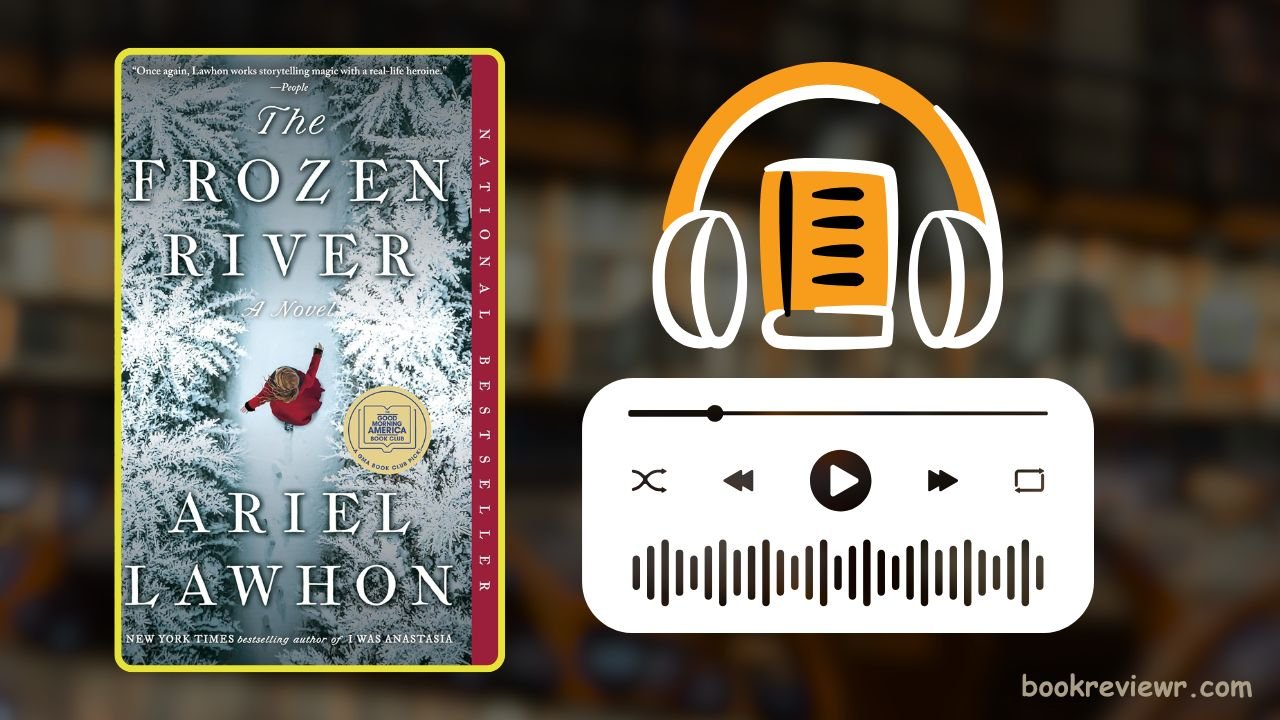
Some audiobooks entertain you. Some educate you. And then there are the rare ones that quietly sit with you long after the final chapter ends.
The Frozen River is that kind of audiobook.
I did not expect a historical mystery set in 1789 Maine to feel this urgent. I did not expect to feel angry, protective, heartbroken, and deeply inspired all within the same listening week. But here we are.
Inspired by the real diary of Martha Ballard, a midwife who delivered over 800 babies and documented crimes, births, deaths, and injustices, this audiobook feels less like fiction and more like stepping into someone’s preserved memory.
If you loved strong women like Claire Fraser from Outlander, you are going to feel right at home here. But what surprised me most is how modern this story feels. It may take place in 1789, but the themes feel painfully current.
Who Should Listen to This Book?
- This audiobook is perfect for you if:
- You love historical fiction that feels immersive and researched
- You enjoy mystery with courtroom tension
- You gravitate toward strong, morally complex female leads
- You appreciate character-driven storytelling over fast action
- You loved books like I Was Anastasia or Code Name Hélène by Ariel Lawhon
- You enjoy listening experiences that feel atmospheric and intimate
If you only want fast-paced thrillers with constant twists, this may feel slower than you expect. But if you want layered storytelling with emotional weight, this is absolutely worth your 15 hours.
Quick Book Snapshot
Title: The Frozen River
Author: Ariel Lawhon
Narrators: Jane Oppenheimer and Ariel Lawhon
Length: 15 hours and 5 minutes
Release Date: December 5, 2023
Publisher: Random House Audio
Genre: Historical Fiction, Mystery
Audible Rank: #1 in Historical Fiction and Women Sleuth Mysteries
It was also a New York Times Bestseller and a GMA Book Club Pick, which immediately raised my expectations.
Short Non-Spoiler Summary
Maine, 1789.
When a man is found frozen in the Kennebec River, Martha Ballard is called to examine the body. As a respected midwife and healer, she has intimate knowledge of her town. She keeps a diary documenting everything that happens in Hallowell, including an alleged rape months earlier involving two respected men.
One of those men is now dead.
When the local physician dismisses her findings and labels the death an accident, Martha refuses to stay silent. As winter deepens and a trial approaches, her diary becomes central evidence. But the truth threatens powerful men and even those she loves.
At its heart, this is a story about justice, voice, and the cost of telling the truth when society expects you to remain quiet.
My Listening Experience
This is the part that matters most to me. Because you can read the summary anywhere. But you cannot read how it felt to live inside this audiobook for 15 hours.
I started listening on a quiet evening, thinking I would just try the first chapter. Within minutes, I noticed something. The narration felt intimate. Jane Oppenheimer does not perform Martha as dramatic or overly theatrical. She makes her feel grounded. Intelligent. Observant. Controlled.
It felt like someone was reading me a diary by candlelight.
There is a calm strength in Martha’s voice. A quiet confidence. When she examines the frozen body in the river, I could almost feel the cold air. The tension is not loud. It is steady and persistent.
What truly impressed me was the pacing. At 15 hours, this is not a short audiobook. But I never felt fatigued. The chapters move between investigation, domestic life, courtroom tension, and diary entries in a way that feels natural. I found myself making excuses to continue listening. Cooking with one earbud in. Taking longer walks. Even sitting in my parked car just to finish a chapter.
One particular moment stayed with me. During the trial scenes, as Martha’s credibility is questioned simply because she is a woman, I felt genuine frustration. Not the kind you feel in fictional drama. The kind that feels real because it mirrors things we still see today. That emotional reaction is what separates a good audiobook from a powerful one.
Ariel Lawhon also narrates parts of the book, and I always love when authors participate in narration. There is something subtle that changes. The tone feels intentional. You can sense the care behind every line.
The winter setting is almost a character itself. Listening to descriptions of snow-covered landscapes while I was wrapped in a blanket made the experience immersive. I did not just hear the story. I felt placed inside it.
And let me say this honestly. There were moments when the story slowed. But instead of losing interest, I found myself leaning in more. The quieter scenes built tension in a different way. They allowed the emotional stakes to deepen.
By the final few chapters, I was fully invested. Not just in solving the mystery. But in Martha’s legacy.
When the audiobook ended, I did not immediately start another one. I needed a pause. That is usually my sign that something has truly affected me.
Deep Analysis
At first glance, The Frozen River appears to be a historical murder mystery. But beneath that surface, it explores several powerful themes.
1. Women and Credibility
Martha’s knowledge comes from experience. She has delivered hundreds of babies. She understands anatomy. She understands people. Yet a male physician can dismiss her conclusions simply because of his title. This conflict feels incredibly relevant. The book highlights how expertise is often undervalued when it comes from women.
2. The Power of Documentation
Martha’s diary is central to the story. It is not just personal reflection. It becomes legal evidence. In a time when women were expected to remain silent, her written words become undeniable proof. This concept fascinated me. It made me think about how personal records shape history.
3. Community and Reputation
Hallowell is a tight-knit town. Everyone knows everyone. Justice is complicated when the accused are respected men. The social pressure is intense. Lawhon captures the suffocating atmosphere of small-town politics beautifully.
4. Moral Complexity
Martha is not portrayed as perfect. She loves fiercely. She struggles with loyalty. She fears consequences. That complexity makes her feel real. She is brave, but not fearless. And that distinction matters.
From a writing perspective, Ariel Lawhon blends fact and fiction seamlessly. The research is clear, but it never feels heavy or academic. Instead, it feels lived-in. The dialogue sounds natural for the period without becoming hard to follow.
The audiobook format enhances all of this. The subtle vocal shifts between characters make courtroom scenes tense. Emotional moments land harder because you can hear the restraint or anger in the narrator’s voice.
If I had physically read this book, I believe I would have loved it. But listening to it added an emotional dimension that made it unforgettable.
Emotional Closing
When I think about The Frozen River, I do not first think about the murder mystery.
I think about Martha Ballard standing firm.
I think about a woman in 1789 refusing to accept silence.
I think about how many women like her existed in history and were never recorded.
This audiobook reminded me that courage does not always look loud. Sometimes it looks like persistence. Like writing the truth in a diary every single day. Like refusing to let someone else rewrite your conclusions.
If you are looking for an audiobook that will simply pass time, this may not be it.
But if you want something immersive, intelligent, and emotionally resonant, this is absolutely worth your 15 hours.
By the end, I did not just admire Martha. I respected her.
And honestly, I think that is the highest compliment I can give any story.